
Reimagining Healthcare in Southern Africa: The AfriMed™ Vision
A Founder’s perspective on fragmented care, the ConnectedCare ambition and building a more connected future with Southern African communities.

Ndaba Ndlovu
Lead InnovatorI founded AfriMed™ around a simple question: what would care feel like if people did not have to hold every part of the journey together themselves? A consultation matters, but so do the arrangements before it, the information available during it and the responsibility for what happens next. Our purpose is to help make those connections clearer. Technology is one part of that work; trust, professional judgement and relationships are just as essential.
Why the gaps between appointments matter
Fragmented care is not an abstract systems problem for the person living through it. It can mean repeating a history, looking for a document, travelling without knowing whether an appointment is confirmed, or waiting for a next step without knowing whom to contact. Each individual service may have done its own work, while the connections between services remain unclear.
Imagine someone whose consultation ends with a recommendation to see another professional. This is an illustration, not an AfriMed case report. The person still needs to understand why, which information is relevant, whether the receiving team has accepted the request and who will answer questions in the meantime. Sending a message is only one step. A useful handover also needs shared understanding and an identifiable person or team responsible for acting.
The AfriMed™ Vision
ConnectedCare is our ambition for a more coherent journey: people can understand the next step, professionals can work with relevant information under the right permissions, and organisations can see the coordination tasks that need attention. I want AfriMed to make room for the conversation and the follow-through, not simply move a queue or a paper form onto a screen.
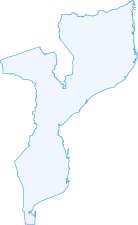
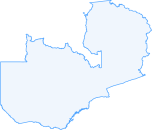
Our regional focus is Southern Africa. It begins with respect for the differences between communities, languages, services and health systems. A map can express that direction; it cannot establish where a service is available. The illustration below represents our regional outlook, not a coverage map or a claim of partnerships in the places shown.







Building with communities
For me, Ubuntu makes the design question practical: does a decision recognise the person and the relationships around them? A family member may help someone use a phone without being entitled to every part of their health record. A professional may need context without needing unrestricted access. Respect means giving people understandable choices and making responsibilities visible.
Building with communities means creating opportunities to challenge our assumptions. A design should be tested against shared devices, changing connectivity, language preferences, disability access, work schedules and the cost of reaching care. These are questions we want to explore with patients, professionals and organisations; this article does not claim that a regional co-design programme or institutional partnership has already taken place.
A foundation, with an honest account of what comes next
AfriMed is a South African registered company. We have developed and tested patient and clinician workflows for appointments, health information and permission-based referral sharing in a controlled environment. Those foundations matter, but they are not evidence that the complete journey is available as a live service everywhere. Location, participating professionals, access arrangements and available services must be confirmed for each setting.
The wider ambition includes more dependable coordination across people and organisations. That requires operational agreements, appropriate permissions, review and support as well as software. I will not describe future connections as established integrations, or a regional ambition as universal coverage. Clinical decisions remain with qualified professionals; an account or a digital suggestion does not replace professional verification or judgement.
How we should judge progress
The questions that matter to me are concrete. Can a person explain the agreed next step? Does a team know what needs review? Can a concern be clarified without losing its context? Can someone get help when the digital route does not work for them? These are standards to work towards and evaluate, not outcomes we claim to have achieved.
AfriMed should grow through careful learning and accountable delivery. If you are a patient, professional or organisation, your questions about the gaps in a care journey are a valuable place to begin a conversation. Our vision is ambitious because the need for continuity is real. It must also remain honest about what has been built, what has been demonstrated and what still needs to be earned.